


What if the next big sound in Indian hip-hop isn’t trying to sound like Mumbai, Delhi or Los Angeles? What if it sounds like Gujarat?
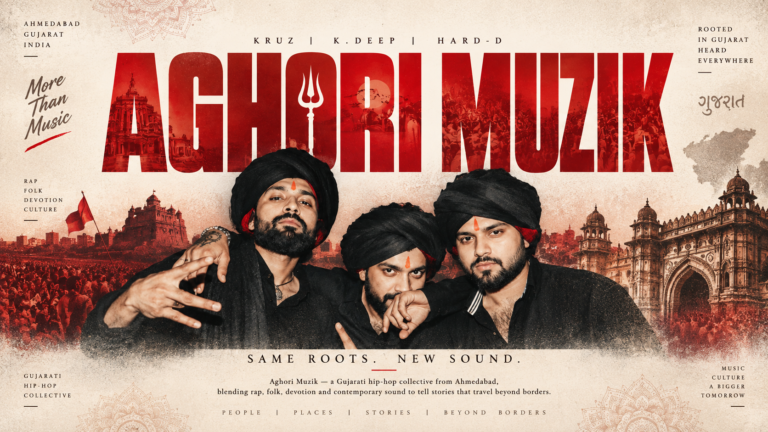
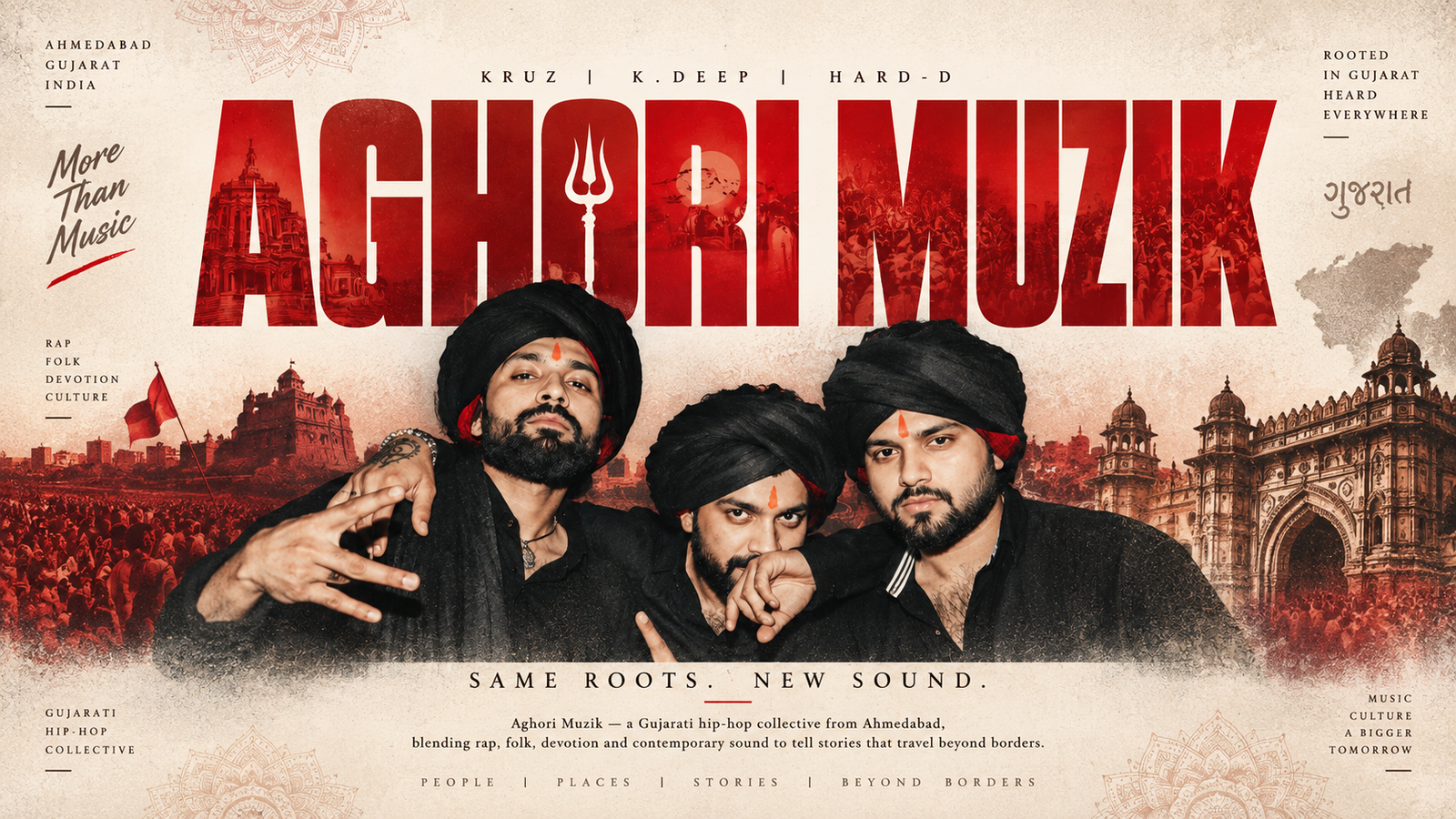
For the members of Aghori Muzik, that question has been at the heart of a decade-long journey. Built around Kruz (Krunal Kareliya), K.Deep (Kuldeep Shrimali) and Hard-D (Hardik Tomar), the Ahmedabad-based collective has spent years turning Gujarati language, folk traditions, devotional influences and contemporary hip-hop into a sound that feels distinctly its own.
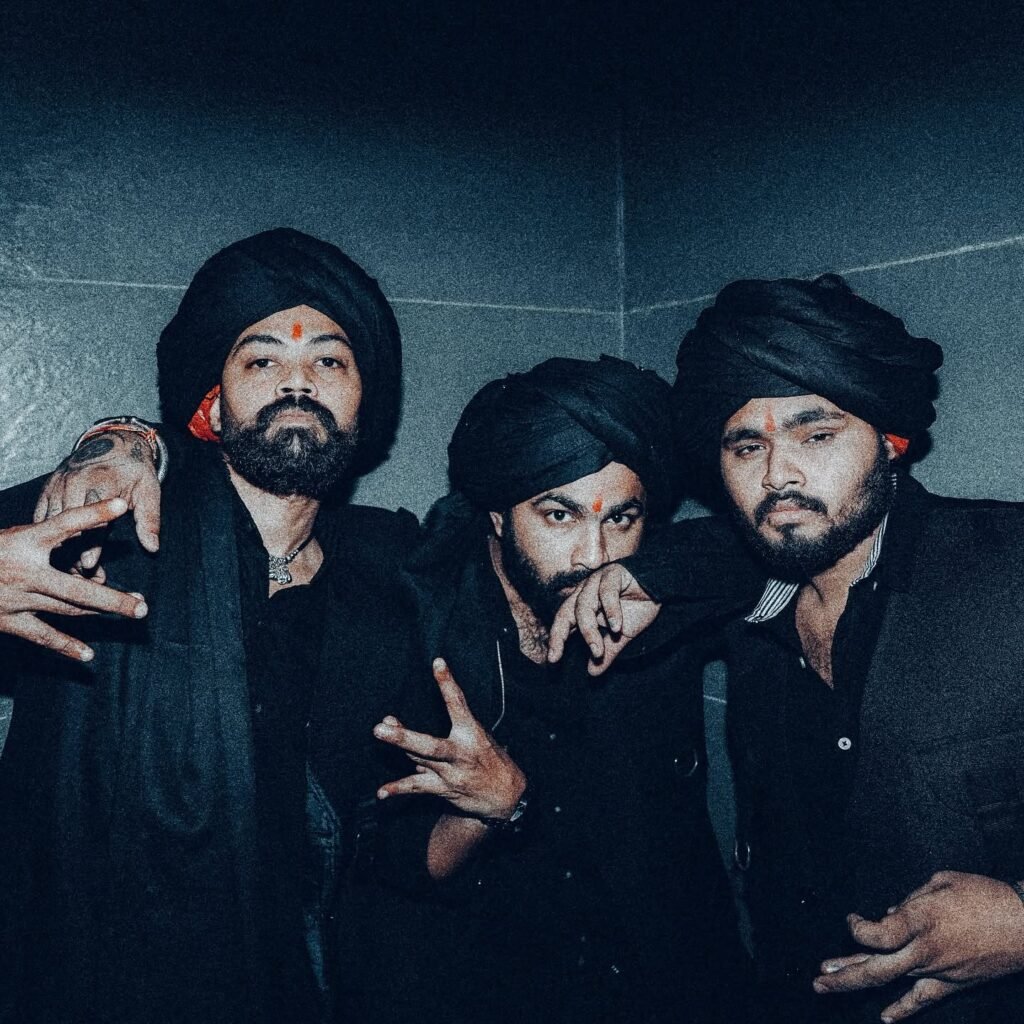
Their story is especially compelling because it didn’t begin with a major studio, a record label or an established industry machine.
It began with ambition, experimentation and a tiny makeshift recording setup.
Today, after a decade of music-making, performances across India and overseas, collaborations, film projects and a growing catalogue of Gujarati hip-hop, Aghori Muzik is looking beyond its home state—with an increasingly clear ambition to make Gujarati hip-hop a global sound.
And perhaps that is what makes their journey worth paying attention to.
They aren’t trying to become less Gujarati to reach a wider audience.
They are betting that being unmistakably Gujarati is precisely what can take them further.
Who Are Aghori Muzik?
Aghori Muzik is a Gujarati hip-hop collective based in Ahmedabad, Gujarat, comprising Kruz, K.Deep and Hard-D.
Over the years, the trio has developed a musical identity that moves comfortably between rap, contemporary hip-hop, Gujarati folk, Garba and devotional influences.
That range is important.
Calling Aghori Muzik simply a “rap group” doesn’t quite capture what they have built. Their music is rooted in the language and cultural vocabulary of Gujarat while using the production, energy and attitude of contemporary hip-hop.
Their catalogue includes tracks such as “Panchayat,” “Sorath,” “Thakar Kare Ae Thik,” “Radha Govaldi,” “Jhamkudi,” “Vaage Vaage” and several other releases and collaborations.
Their approach has helped position Aghori Muzik as one of the most recognisable names associated with the modern Gujarati hip-hop movement.
But the most interesting part of their story isn’t simply the number of songs they have released.
It is what they chose to build those songs around.

The Unlikely Beginning: A Studio Made From PVC Pipes and Blankets
Every successful independent music story has an early chapter that sounds almost unbelievable in hindsight.
For Aghori Muzik, that chapter involved a recording booth made from PVC pipes and blankets.
According to The Times of India, the group’s early setup was approximately five feet by five feet, constructed to create a makeshift recording environment. The equipment was basic, but the ambition wasn’t.
That detail is more than an amusing origin story.
It represents the reality faced by countless independent musicians in India: limited resources, limited infrastructure and very little certainty that an audience is waiting on the other side.
Aghori Muzik continued anyway.
They experimented with recording, production and songwriting while developing a style that didn’t have an obvious template to follow.
Gujarati hip-hop wasn’t simply a genre they were entering.
In many ways, they were helping define what it could sound like.
When Gujarati Became the Language of Hip-Hop
One of Aghori Muzik’s most important creative decisions was also one of its simplest:
They rapped in Gujarati.
That sounds obvious today, when regional-language music has become an increasingly important part of India’s streaming ecosystem.
But building a contemporary hip-hop identity around Gujarati meant challenging the assumption that mainstream rap needed to be primarily Hindi or English.
Aghori Muzik instead made the language part of the musical identity itself.
The result is music where Gujarati isn’t translated, softened or pushed into the background.
It is front and centre.
The slang, rhythm, pronunciation, cultural references and lyrical character all become part of the flow.
And that gives the music something that is difficult to manufacture artificially:
a sense of place.

More Than Rap: The Aghori Muzik Sound
If there is one word that repeatedly emerges from Aghori Muzik’s music, it is fusion.
But even that word can feel too generic.
Their approach is less about combining genres for novelty and more about asking how traditional Gujarati sounds can exist naturally inside contemporary music.
That is why folk and devotional influences appear so comfortably alongside hip-hop.
In interviews, the group has spoken about connecting hip-hop with folk and devotion as part of their effort to represent Gujarat and take Gujarati music to a wider audience.
This philosophy can be heard across their catalogue.
A track can carry the rhythmic confidence of rap while drawing from centuries-old cultural references.
Garba can become a hip-hop framework.
Devotional themes can coexist with contemporary production.
Folk storytelling can be delivered with the energy of a modern rap performance.
The important thing is that these elements don’t feel like separate identities.
They are part of the same Aghori Muzik identity.
“Panchayat” and the Early Aghori Muzik Identity

One of the useful windows into the group’s earlier sound is “Panchayat.”
The track features Kruz, K.Deep and Hard-D, with production credits associated with Kruz. It presents Gujarati rap with a direct, energetic delivery and demonstrates the group’s early commitment to making Gujarati a natural language for hip-hop.
“Panchayat” matters because it represents something larger than one release.
It helped articulate an idea:
Gujarati doesn’t need to be adapted to hip-hop. Hip-hop can adapt to Gujarati.
That distinction has become increasingly important as regional-language artists across India build audiences beyond their immediate geography.
“Sorath”: A Sound Rooted in Gujarat

Among Aghori Muzik’s best-known songs is “Sorath,” featuring Hariom Gadhavi.
The track has accumulated millions of streams on Spotify and stands as a strong example of the group’s ability to place regional identity at the centre of contemporary production.
“Sorath” is particularly representative of the space Aghori Muzik occupies.
It doesn’t require listeners to choose between traditional and modern.
It allows both to exist together.
The music feels contemporary enough for today’s digital audience while retaining a strong Gujarati character.
That balance is one of the hardest things for a fusion artist to achieve.
Too much traditionalism can make a track feel disconnected from contemporary audiences.
Too much modernisation can erase the very identity that made the song interesting.
Aghori Muzik’s strongest releases operate somewhere in between.
Bringing Devotion Into Contemporary Hip-Hop
Another defining element of Aghori Muzik’s catalogue is its willingness to embrace spirituality and devotion.
“Thakar Kare Ae Thik” is one of the clearest examples.
Centred around Krishna and Dwarkadhish, the song brings devotional subject matter into a contemporary Aghori Muzik framework. It has also become one of the group’s better-known songs across streaming platforms.
This is significant because Indian hip-hop has enormous room for stories beyond the conventional themes of street life, ambition, relationships and personal struggle.
India’s mythology, spirituality, folk traditions and regional histories provide an extraordinary lyrical universe.
Aghori Muzik has shown that those subjects don’t need to remain confined to traditional musical formats.
They can live inside hip-hop too.
From Gujarati Rap to Garba and Folk Fusion
Perhaps nowhere is this philosophy more visible than in Aghori Muzik’s work around Garba.
The group has explored the idea of Hip-Hop Garba, bringing contemporary rap and production sensibilities into one of Gujarat’s most recognisable musical traditions.
Their large-scale “Khamma Nonstop Hip-Hop Garba” project brought together Aghori Muzik with artists including Geeta Rabari, Santvani Trivedi and Umesh Barot.
This kind of collaboration demonstrates an important shift.
Hip-hop doesn’t necessarily have to replace traditional music.
It can become another way of presenting it.
For younger listeners who may encounter cultural traditions differently from previous generations, that can be powerful.
The rhythm remains familiar.
The presentation changes.
And suddenly, an old cultural vocabulary has a new route into the digital age.
Aghori Muzik and Gujarati Cinema
The group’s journey has also extended into Gujarati cinema.
Aghori Muzik has been involved in music for films including “Jhamkudi,” with the group credited alongside members including Kruz and K.Deep.
Their work has also extended to other Gujarati film projects, demonstrating how the sound they developed within the independent music scene has increasingly found a place within the broader entertainment industry.
That transition matters.
Independent artists often spend years building an identity before the mainstream industry starts paying attention.
For Aghori Muzik, the movement from self-driven releases toward cinema, larger collaborations and bigger productions reflects the growing acceptance of regional hip-hop as a serious creative force.
“BIJNESS JIGNESS” and the Evolution of the Collective
The group’s evolution can also be traced through projects such as “BIJNESS JIGNESS.”
In a Fafda Philosophy podcast conversation, K.Deep, Kruz and Hard-D discussed their journey, their creative process and their approach to Gujarati rap and hip-hop.
Projects like this matter because Aghori Muzik’s story isn’t just about individual viral songs.
It is about building a body of work.
Over time, the group has moved through different forms of expression—straight rap, folk fusion, devotional music, Garba, film soundtracks and collaborative projects.
That evolution has helped keep the collective from becoming trapped inside one definition.
A Decade of Aghori Muzik
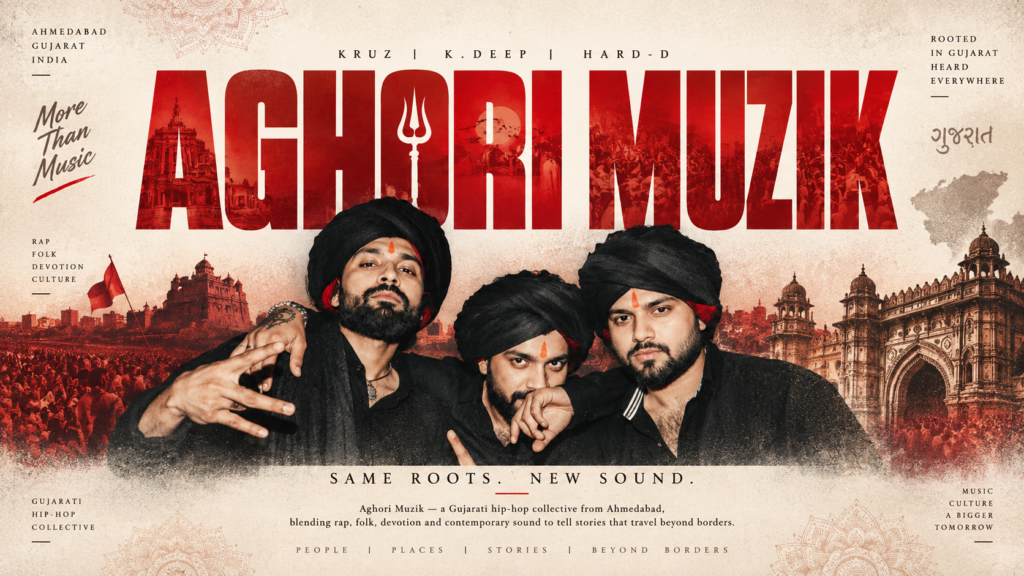
2026 represents a particularly important moment for Aghori Muzik.
The group has now reached ten years of its journey, a milestone that provides useful perspective on just how far the collective has travelled from its earliest recording experiments.
Recent coverage has highlighted their ambition for the next decade: making Gujarati hip-hop heard around the world.
That ambition is reflected in the group’s international performances and growing overseas audience.
Reports have noted performances across India, the United States, Australia and Canada, with the group’s members discussing the response they have received from audiences abroad.
For a genre rooted in one regional language, that international connection is significant.
It demonstrates something that streaming-era music has made increasingly obvious:
A song doesn’t have to be linguistically universal to become emotionally universal.
“Welcome To Gujarat”: The Next Chapter
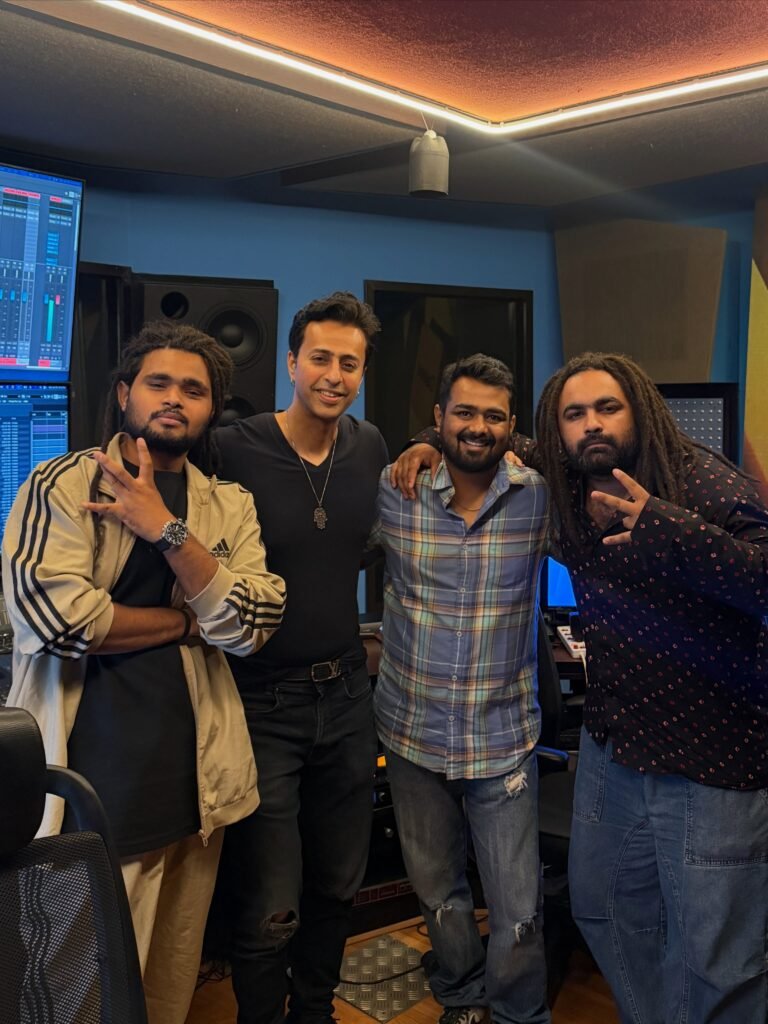
The group’s 2026 ambitions are closely connected to “Welcome To Gujarat,” a major album project positioned around the idea of presenting Gujarat through a contemporary musical lens.
Recent reports describe the project as a 14-track album, with the group also discussing international ambitions and plans connected to reaching Gujarati listeners around the world, particularly the diaspora.
The title itself is revealing.
“Welcome To Gujarat” isn’t simply an album name.
It sounds like an invitation.
An invitation to people who already understand Gujarat.
An invitation to Gujaratis living far away from home.
And perhaps even an invitation to listeners who have never encountered Gujarati hip-hop before.
If Aghori Muzik succeeds in that mission, the project could become more than another release in their catalogue.
It could function as a musical introduction to contemporary Gujarat.
Aghori Muzik in September 2026
Their story is not sitting comfortably in the past.
The group continues to release music.
Apple Music currently lists “Sathe Krishna Pachi Seno Prashna,” released on September 3, 2026, among the group’s latest releases.
Other recent releases include “Udti Raakh – Mahakal Anthem,” “Garba Gheli” and “Fagan Foram.”
That continued output is important.
A regional music movement cannot survive purely on the strength of its breakthrough era.
It has to keep changing.
And Aghori Muzik continues to experiment with different musical spaces while maintaining the central identity that made the collective recognisable in the first place.
Why Aghori Muzik Matters
There are many ways to measure an artist’s success.
Streams.
Views.
Tickets.
Collaborations.
Film credits.
International performances.
But Aghori Muzik’s most interesting contribution is harder to quantify.
They have helped expand the imagination of what Gujarati music can be.
They demonstrate that a regional language can carry contemporary hip-hop.
They demonstrate that folk music can coexist with rap.
They demonstrate that devotion can find a home in modern production.
And they demonstrate that cultural specificity doesn’t necessarily prevent an artist from reaching a global audience.
In fact, it can become the reason people listen.
The Bigger Indian Hip-Hop Story
Aghori Muzik’s journey also fits into a larger transformation taking place across India.
Indian hip-hop is no longer a single-language phenomenon.
Artists working in Punjabi, Marathi, Bengali, Tamil, Telugu, Malayalam, Gujarati and other languages are increasingly building audiences on digital platforms.
That matters because the internet has changed the economics of discovery.
An artist no longer needs to convince one national gatekeeper that a regional sound is commercially viable.
They can find their audience directly.
Aghori Muzik’s decade-long journey is an example of what happens when artists take that opportunity seriously.
They didn’t wait for Gujarati hip-hop to become mainstream before creating it.
They created first. The audience followed.
What Makes Aghori Muzik Stand Out?
They made language part of the identity
Gujarati isn’t simply the language of their lyrics. It is central to their rhythm, references and musical personality.
They treat culture as living material
Folk, Garba and devotional traditions aren’t presented as museum pieces. They are reinterpreted for contemporary listeners.
They embraced independence
Their early recording story shows how much can be achieved without ideal infrastructure when the creative drive is strong.
They evolved beyond one genre
Rap is the foundation, but their catalogue reaches into folk fusion, devotional music, Garba and cinema.
They think beyond Gujarat
Their 2026 ambitions increasingly point toward international audiences and the Gujarati diaspora.
The Most Important Lesson From Aghori Muzik
Perhaps the greatest lesson in the Aghori Muzik story is surprisingly simple:
You don’t always have to become more universal to become more successful.
Sometimes you need to become more specific.
More local.
More honest.
More connected to your own language and culture.
Aghori Muzik’s music works because there is a clear sense of where it comes from.
Ahmedabad.
Gujarat.
Gujarati language.
Folk traditions.
Devotional culture.
Modern hip-hop.
All of those elements exist simultaneously.
And that combination gives the music its personality.
From Ahmedabad to the World
Aghori Muzik’s story began with three artists and a tiny recording setup.
Ten years later, the ambition is much larger.
The collective has moved through underground rap, folk fusion, devotional music, Garba, cinema, major collaborations and international performances.
Now, with projects such as Welcome To Gujarat and a stated ambition to take Gujarati hip-hop further into the world, the next chapter could be their most interesting yet.
Whether the next decade brings bigger stages, more international collaborations or an even broader definition of Gujarati hip-hop, one thing has already been accomplished.
Aghori Muzik helped make it possible to hear Gujarat differently.
Not as something trapped in the past.
Not as something that needed translation before it could become contemporary.
But as a culture with its own rhythm, its own stories and its own place in the future of Indian music.
From a 5×5 recording booth to an international stage, Aghori Muzik’s journey is ultimately a reminder that the sound you are searching for may already be hiding in your own backyard.
And sometimes, the best way to take your music to the world is to first make sure it sounds unmistakably like home.
Frequently Asked Questions
Who are the members of Aghori Muzik?
Aghori Muzik is a Gujarati hip-hop collective consisting of Kruz (Krunal Kareliya), K.Deep (Kuldeep Shrimali) and Hard-D (Hardik Tomar).
Where is Aghori Muzik from?
Aghori Muzik is associated with Ahmedabad, Gujarat, and is primarily known for Gujarati hip-hop. There is no reliable evidence supporting the claim that the group is from Rajasthan.
What kind of music does Aghori Muzik make?
Aghori Muzik combines Gujarati hip-hop and rap with folk, Garba, devotional music and contemporary production. Their catalogue also includes music connected to Gujarati cinema.
What are some popular Aghori Muzik songs?
Some notable tracks associated with Aghori Muzik include “Sorath,” “Thakar Kare Ae Thik,” “Panchayat,” “Radha Govaldi,” “Jhamkudi” and “Vaage Vaage.” Their catalogue continues to expand with new releases in 2026.
What is Aghori Muzik’s “Welcome To Gujarat” project?
Welcome To Gujarat is a major 2026 Aghori Muzik album project intended to showcase Gujarati culture and identity through contemporary music, with the group also expressing ambitions to reach international audiences and the Gujarati diaspora.
Conclusion: Gujarati Hip-Hop Has Found Its Voice
Aghori Muzik’s decade-long journey is more than the story of three rappers from Ahmedabad.
It is the story of a regional language finding new confidence inside one of the world’s most influential contemporary music cultures.
They took Gujarati words, rhythms, stories, folk traditions and devotion—and gave them bass, beats and a modern stage.
And now they are looking beyond Gujarat.
The most exciting part is that they aren’t leaving their identity behind to get there.
They are taking Gujarat with them.